

Jobs AI Is Replacing in 2026 — And the Ones It Can't Touch
The honest, no-hype guide to which careers are actually at risk and what to do if yours is one of them.
Aman Singh·
5 min read·
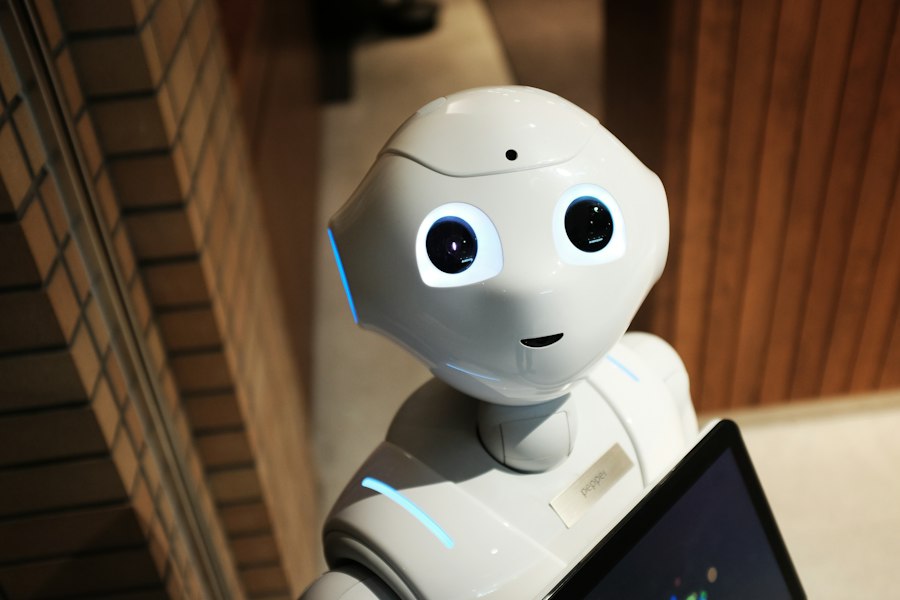
Everyone has an opinion on whether AI will take jobs. Most of those opinions are either panic or denial. This article is neither. It's just what's actually happening right now, backed by real data, real layoffs, and real hiring trends in 2026.
The Short Answer
AI is not replacing humans. It is replacing tasks. The problem is that for some jobs, those tasks are the entire job.
Jobs Already Being Replaced
Data Entry and Processing
This one is essentially done. Companies that once employed teams of people to input, clean, and organise data have automated the entire function. Tools like Microsoft Copilot, Zapier AI, and custom LLM pipelines handle what used to take full departments. Hiring for pure data entry roles dropped by over 60% between 2023 and 2026 across Fortune 500 companies.
Junior Copywriting and Content Writing
Not all writing — but the kind that follows a template. Product descriptions, SEO articles, social media captions, email sequences, ad copy. Agencies that employed 20 junior writers now employ 3 senior editors who review and refine AI output. The junior writing pipeline has largely collapsed.
Basic Customer Support
Tier 1 customer service — answering FAQs, processing returns, resetting passwords, checking order status — is now almost entirely handled by AI agents at major companies. Apple, Amazon, and most banks have deployed conversational AI that resolves the majority of support tickets without a human ever seeing them.
Junior Translators
Professional translation for legal, medical, and literary work still requires humans. But bulk translation — websites, product listings, user manuals, subtitles — is now done by AI at a fraction of the cost. The freelance translation market for routine documents has effectively collapsed.
Paralegal and Legal Research
Law firms are using AI to do in hours what junior paralegals used to do in weeks — searching case law, summarising documents, drafting standard contracts, flagging inconsistencies. Several major UK and US law firms publicly confirmed reducing junior hiring by 20–30% in 2025 citing AI adoption.
Basic Accounting and Bookkeeping
Routine bookkeeping — categorising expenses, reconciling accounts, generating reports — is now largely automated. Tools like Intuit's AI, Xero, and custom GPT integrations handle the mechanical parts of accounting. The demand for bookkeepers without advisory skills has dropped sharply.
Radiology — Partially
This one surprises people. AI diagnostic tools are now reading X-rays, MRIs, and CT scans with accuracy that matches or exceeds junior radiologists for specific conditions. Radiologists are not gone — but the number of radiologists needed per scan has decreased significantly as AI handles first-pass screening.
Jobs AI Is Struggling to Replace
Trades — Plumbers, Electricians, Carpenters
AI cannot physically fix a pipe. It cannot rewire a house. It cannot look at a specific structural problem in a specific building and make a judgment call based on 20 years of experience. Trades are deeply physical, deeply contextual, and deeply human. Demand is actually increasing as fewer young people enter the trades.
Therapists and Counsellors
People in emotional distress need human connection, not a well-worded paragraph. AI can provide information and basic support, but the therapeutic relationship — trust built over time with a real person — is not something AI replicates effectively. Mental health professionals are in higher demand in 2026 than at any previous point.
Nurses and Hands-On Healthcare
AI can assist with diagnosis and administrative work. It cannot give an injection, hold a patient's hand, notice that something feels wrong during a routine check, or make rapid physical judgments in an emergency ward. Nursing and hands-on patient care is effectively AI-proof for the foreseeable future.
Senior Engineers and Architects
Vibe coding tools can build apps. They cannot design the architecture of a system that needs to handle 10 million users, survive failures gracefully, comply with regional data laws, and evolve over five years. Senior engineering judgment — the kind that comes from building things that broke and learning why — remains irreplaceable.
Teachers
AI can deliver information better than most textbooks. It cannot notice that a specific child is struggling emotionally, adapt to a classroom dynamic in real time, build relationships that motivate young people, or provide the social environment that school represents. Teaching is changing — but teachers are not disappearing.
Executive Leadership and Strategy
Deciding what a company should do over the next five years, reading a room in a boardroom, building relationships with partners, making high-stakes calls with incomplete information — these are deeply human functions. AI can inform these decisions but cannot make them responsibly.
What the Data Actually Says
The World Economic Forum's 2025 Future of Jobs report estimated that AI will displace 85 million jobs globally by 2030 but create 97 million new ones. The net is positive — but that average hides enormous variation. Someone whose entire job is data entry is not comforted by the fact that somewhere a new prompt engineering role opened up.
Goldman Sachs estimated in updated 2025 research that 300 million full-time jobs globally are exposed to automation. Exposed does not mean eliminated — it means the nature of the work is changing significantly.
The Honest Advice
If your job is primarily producing a standard output from a standard input — writing a standard report, filling a standard form, answering a standard question — that function is at genuine risk. Not necessarily your job, but that function within your job.
The people thriving in 2026 are those who use AI as a multiplier rather than a competitor. A copywriter who uses AI to produce 10× the work and focuses on strategy and voice is not being replaced — they are being elevated. A junior developer who uses Claude Code to ship features faster than a senior developer could manually is not being automated out — they are competing at a higher level.
The question worth asking is not "will AI take my job" but "which parts of my job does AI make irrelevant, and what should I learn instead."
The answer to that question, answered honestly and acted on quickly, is the most valuable career move available right now.
Artificial IntelligenceFuture of WorkCareer AdviceJob MarketAI Automation
Written by Aman Singh
Software Developer
Responses (0)
Log in to join the conversation
No responses yet. Be the first to share your thoughts.